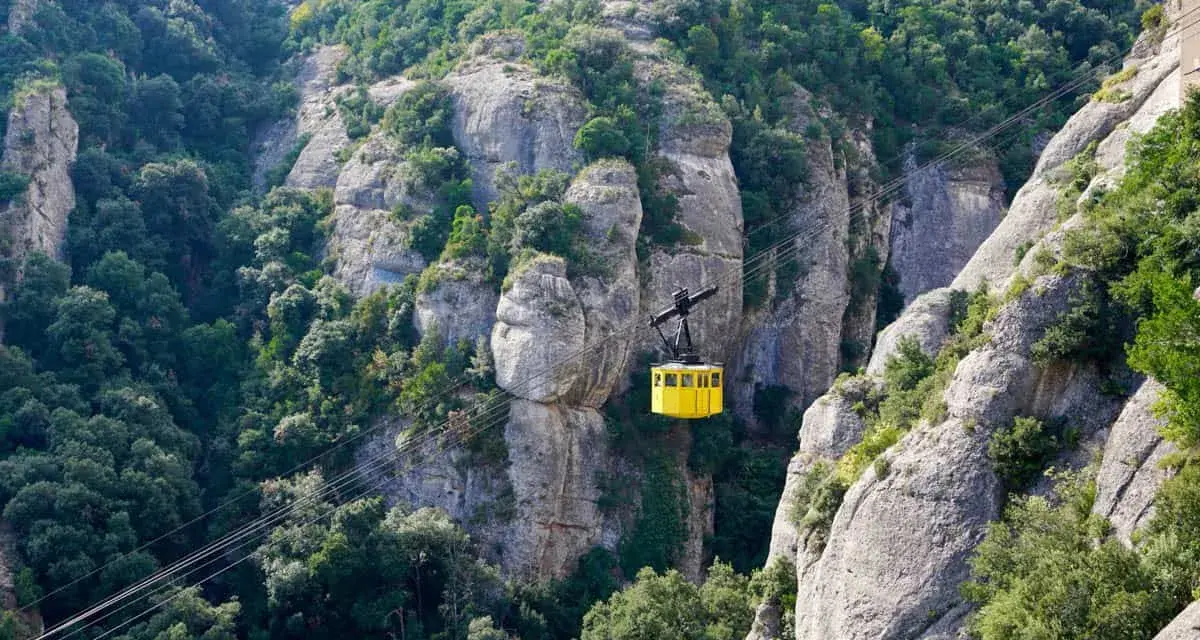
The cable car to Montserrat is the quickest and most scenic way to climb from the valley to the monastery, and in 2026 it is still one of the smartest ways to build the mountain into a Barcelona day trip. In this guide I cover how the Aeri fits into the journey, what it costs, when the rack railway makes more sense, and the small details that prevent delays. If you want the practical version rather than vague travel talk, this is the information that actually helps.
Key facts before you choose your ride up Montserrat
- The Aeri de Montserrat climbs 544 metres over a route of 1,350 metres, and the ride takes about 5 minutes.
- Cabins run roughly every 15 minutes, and the service is operating in 2026.
- Adult fares are €10 one way or €15 return; children aged 4 to 13 pay €5.25 or €7.50; seniors 65+ pay €8.75 or €12.50.
- You can book online or buy at the station, but busy weekends are easier if you reserve ahead.
- The cable car is the better pick for views and speed; the rack railway is the calmer choice if you dislike heights.
- Wheelchair users should check access before travelling, because the cable car is not yet adapted.
What the ascent feels like
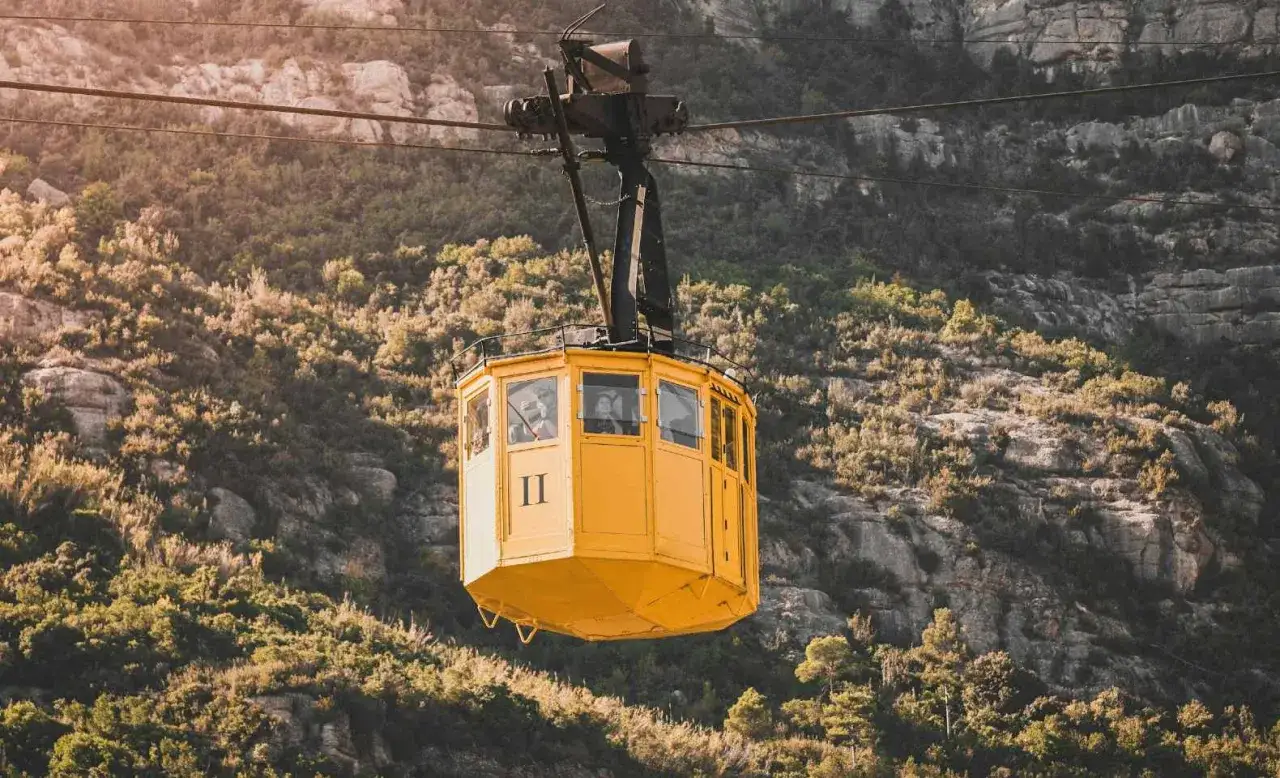
For me, the appeal of the Montserrat cable car is that the transfer becomes part of the day, not something you rush through and forget. The climb is steep enough to feel dramatic, but short enough to keep the momentum of the trip, which is exactly what most day visitors want.
The numbers explain why it works so well: the route is 1,350 metres long, it rises 544 metres, and each cabin takes up to 32 people. That means the system is built for a fast flow of passengers and a big visual payoff, not for a slow mountain commute. If you are comfortable with heights, it is hard to beat as a first impression of Montserrat; if you are not, the rack railway will feel more settled and predictable. Once you know how the ride feels, the next question is how to fit it into a Barcelona day without wasting time.
How to get there from Barcelona
The usual route starts on the FGC network at Plaça Espanya in Barcelona, then continues to the Montserrat connection point for the Aeri. The official journey information lists departures from 08:26 am, which is early enough for a relaxed day if you do not try to squeeze too much else into it.
I would plan the day in layers: train first, ascent second, monastery and viewpoints after that. If you want a simpler purchase, the combined ticket options let you choose the cable car or the rack railway at the time of booking, so you do not have to lock yourself in before you know what kind of day you want.
- Use the Barcelona train leg to avoid parking stress in the city.
- Check the same-day timetable before leaving, especially on weekends and holidays.
- Choose a combined pass if you want transport bundled with other Montserrat extras.
- If you are driving, the lower station has its own car park, with extra space for coaches and caravans.
That route is straightforward once you know it, and the real planning pressure shifts to tickets and prices.
Ticket prices and booking rules that matter
The 2026 fare structure is refreshingly plain. For a normal visitor, the adult cable car ticket is €10 one way or €15 return, which is the number I would keep in mind when comparing options. For children aged 4 to 13, the fare is €5.25 one way or €7.50 return, and for seniors 65 and over it is €8.75 or €12.50.
| Passenger | One way | Return | Practical note |
|---|---|---|---|
| Adult | €10.00 | €15.00 | Best default if you are going up and down by Aeri. |
| Child 4 to 13 | €5.25 | €7.50 | Useful for family trips; under 4s travel free. |
| Senior 65+ | €8.75 | €12.50 | Small saving, but worth checking if you qualify. |
| Group 20+ people | From €7.75 | From €10.50 | Worth asking about if you are travelling with a club, school, or company. |
If you want more than transport, the bundles are there, but I would only buy them if you genuinely want the extras. Aeri plus museum starts from €24.25 for adults, Aeri plus lunch starts from €35.75, and the larger meal-and-museum combinations go higher still. For a budget-conscious day, transport-only is usually the cleaner choice.
- Booking ahead is helpful, but boarding is still first come, first served when you arrive.
- You can buy tickets at the top or bottom station, or online.
- Dogs travel free, provided they wear a muzzle and stay on a lead.
- Prams are allowed if folded, but the facility is not designed around bulky equipment.
- The cable car is not yet wheelchair adapted, so check access before committing to it.
One important detail people miss is that a normal Barcelona integrated transport card does not cover this ascent, so I would treat it as a separate ticket rather than a city transit ride. Once the ticket is sorted, the real choice becomes whether the cable car or the rack railway suits your trip better.
Cable car or rack railway
This is the comparison that usually decides the day. I think of the cable car as the more memorable ascent and the rack railway as the steadier one. Both get you to Montserrat, but they create very different moods before you even reach the monastery.
| Criterion | Cable car | Rack railway |
|---|---|---|
| Ride feel | Steep, scenic, and a little dramatic | Calmer and more like a traditional mountain train |
| Journey time | About 5 minutes | Longer, but smoother and less exposed |
| Frequency | About every 15 minutes | Regular service, but check the season timetable |
| Adult ascent fare | €10 one way or €15 return | €9 one way or €15 return from the lower station |
| Best for | First-time visitors, photographers, and travellers who want the view to be part of the experience | People who dislike heights or prefer a quieter ride |
| My honest take | The more memorable option | The safer comfort choice |
If you are starting in Barcelona, remember that the total price for the rack railway also depends on your train zone, so compare the complete journey rather than only the mountain ascent. My rule is simple: clear weather and a first visit, I take the cable car; mixed nerves in the group, I switch to the rack railway before I even leave the city. That leads straight to the mistakes that cause the most friction on the day.
Common mistakes that waste time
- Assuming it is covered by a normal city pass and discovering too late that you need a specific ascent ticket.
- Arriving too close to closing time and missing the last cabin upward or downward.
- Forgetting accessibility limits if someone in the group uses a wheelchair or needs step-free boarding.
- Bringing awkward luggage and then realising a folded pram is acceptable but bulky gear is not ideal.
- Buying the wrong kind of return when a one-way ticket would have been smarter for a hiking plan.
- Leaving ticket decisions until the platform when a few minutes of planning would have made the whole day smoother.
None of those mistakes are dramatic on their own, but together they create the sort of friction that makes a simple mountain visit feel annoying. With those traps out of the way, the final decision becomes much easier to make.
My rule for choosing the right ascent
When I want the cleanest mix of speed and scenery, I choose the cable car up and keep the rest of the day flexible. When I am travelling with someone who dislikes exposed heights, I do not argue with that preference; I switch to the rack railway and protect the mood of the trip. That is the simplest way to think about Montserrat transport: not as a technical decision, but as a choice about how you want the day to feel.
If budget is the priority, I would compare the ascent-only fare with the bundled options and only pay for the extras I know I will use. If time is tight, I would book early, check the timetable the day before, and make the mountain transfer the easy part of the day rather than the part that causes stress. That is the version of Montserrat I would recommend to anyone planning a practical, well-paced visit.